Understanding how to choose an MVP development company is one of the most important decisions a seed-stage founder can make.
Many seed-stage startups fail to gain traction, not because the idea is wrong, but because they spend too much time and money building a product before validating market demand. When funding is limited, and every month of runway matters, founders need a way to test assumptions, gather user feedback, and reach product-market fit faster.
That's where MVP development companies and experienced MVP development services play a critical role. The right MVP development partner can help you launch a focused product quickly, avoid unnecessary development costs, and make informed decisions based on real user data. The wrong partner can leave you with missed deadlines, bloated features, and a product that fails to solve a real customer problem.
In this guide, we'll review the top MVP development companies for seed-stage startups, explain how we evaluated them, and provide a framework for choosing the best MVP development services based on your budget, goals, and growth stage.
What Is MVP Development?
A Minimum Viable Product (MVP) is the simplest version of a product that solves a real customer problem.
Instead of building every feature on your roadmap, you launch a focused version of the product, collect feedback from real users, and use those insights to guide future development.
For example, if you're building a project management platform, your MVP may only include task creation, project tracking, and collaboration features. Advanced reporting, AI functionality, and integrations can come later after you've validated demand.
The goal of MVP development is simple: learn before you invest heavily.
Rather than relying on assumptions, startups use real user behavior to determine which features matter most and where future development should focus.
A strong MVP development partner helps founders identify the core problem, prioritize essential functionality, and launch quickly enough to gather meaningful feedback. The best MVP development services combine product strategy, design, and engineering to help founders validate ideas before investing heavily in full-scale development.
Why Seed-Stage Startups Need an MVP Development Company
Early-stage founders face a unique challenge. They need to demonstrate traction while operating with limited resources.
Hiring an in-house team requires significant investment in recruiting, salaries, management, and infrastructure. For many seed-stage startups, building an internal product team before validating the idea creates unnecessary risk.
An experienced MVP development company provides immediate access to product strategists, designers, and engineers who understand how to launch quickly and efficiently.
MVP development for startups focuses on rapid validation, lean feature sets, and learning from real user feedback before scaling. Rather than investing heavily in a fully featured product, startups can test assumptions, identify market demand, and make informed product decisions based on actual user behavior.
This approach matters because validation is often the biggest challenge facing startups. According to CB Insights, lack of market need remains one of the most common reasons startups fail.
The best MVP development companies help founders:
This is why MVP development for startups has become a common approach among founders looking to validate demand before expanding engineering teams or raising additional capital. Rather than simply delivering code, experienced MVP partners help founders make better product decisions throughout the development process.
MVP Development Services Pricing for Startups
The cost of MVP development services varies based on product complexity, team location, project scope, integrations, and design requirements. While some startups can validate an idea with a simple MVP, others require advanced functionality, AI features, mobile applications, or compliance requirements that increase development costs.
Understanding MVP development costs helps founders plan budgets realistically and choose the right development approach. For seed-stage startups, the goal is not to build every feature immediately but to launch quickly, validate demand, and improve the product based on user feedback.
When evaluating MVP development for startups, founders should focus on value rather than the lowest price. A cheaper team that builds the wrong product can ultimately cost more than an experienced MVP development partner that helps validate assumptions early, prioritize essential features, and reduce development risk.
Most startup MVP costs fall somewhere between $15,000 and $120,000. Here is a quick orientation:
|
MVP Complexity
|
Cost Range
|
Typical Use Case
|
|
Simple MVP
|
$10,000-$25,000
|
Internal tools, early validation
|
|
Standard MVP
|
$25,000-$70,000
|
SaaS, marketplaces, mobile apps
|
|
Complex MVP
|
$70,000-$120,000+
|
AI features, multi-platform, compliance
|
Factors that influence cost include:
-
Number of features
-
Custom design requirements
-
Third-party integrations
-
Mobile vs. web platforms
-
AI or machine learning functionality
-
Security and compliance requirements
Many startups reduce costs by working with offshore or nearshore development teams while maintaining close collaboration throughout the project.
How We Evaluated the Top MVP Development Companies
Not every software development company is a good fit for a seed-stage startup. To build this list, we evaluated every company using the same five criteria. Rather than relying on marketing claims or company size alone, we focused on the factors that matter most when choosing an MVP development partner at the seed stage.
1. Startup Experience
We prioritized companies with experience working with early-stage startups. Building an MVP requires a different approach than building software for large enterprises. The best partners understand how to balance speed, budget, and validation.
2. End-to-End Services
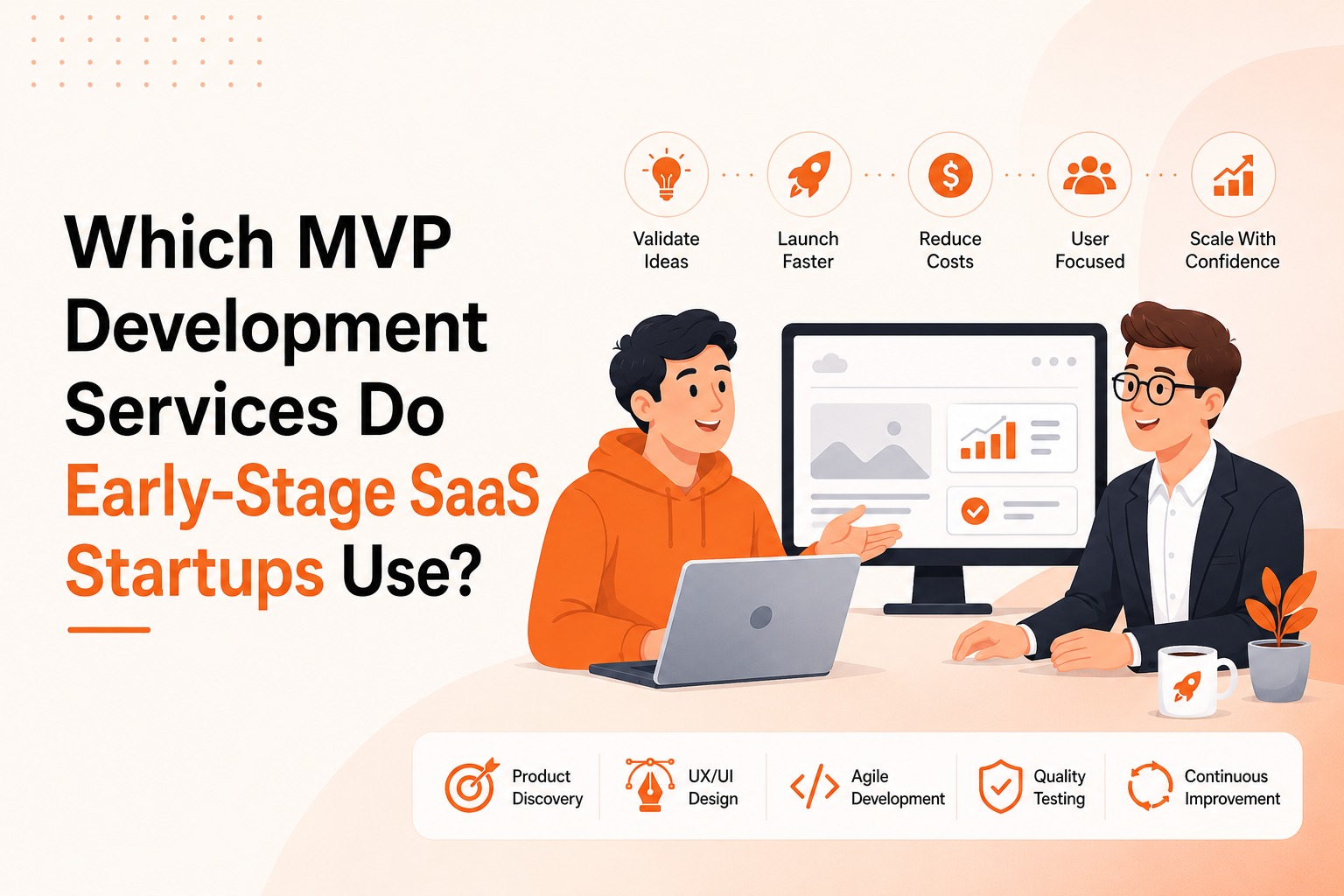
Founders often need more than development alone. We looked for companies that can support the entire MVP journey, including product discovery, UX/UI design, development, testing, and post-launch improvements.
3. Pricing Transparency
Startup budgets are rarely flexible. We favored companies that clearly explain how they charge, whether through fixed-price projects, monthly retainers, or milestone-based pricing, so founders know what to expect before the project begins.
4. Communication and Collaboration
A great product can still fail if communication breaks down. We considered how companies manage client communication, provide project updates, and collaborate across different time zones.
5. Delivery Speed
For most startups, launching quickly matters. We gave preference to companies with a track record of delivering MVPs within a reasonable timeframe, helping founders get real user feedback sooner rather than later.
Note: Companies are included based on the evaluation criteria above. This list is not a ranking, and the best choice depends on your specific needs, budget, and stage of growth.
Top MVP Development Companies for Seed-Stage Startups
There is no single best MVP development agency for every startup. The right partner depends on your budget, product complexity, timeline, and the level of strategic support you need.
1. Multisyn Tech
Website: multisyn.tech
Multisyn Tech is a software development company focused on helping startups and growing businesses build MVPs, SaaS products, and dedicated development teams. The company emphasizes rapid team ramp-up, offshore pricing, and close collaboration with founders throughout the development process.
Core Services
Industries Served
EdTech, SaaS, FoodTech, media, GreenTech, Logistics Services, and creator platforms.
Startup Experience
Multisyn works extensively with startups and early-stage companies, focusing on helping founders launch products quickly while maintaining predictable development costs.
Pros
-
Startup-focused delivery model
-
Offshore pricing with US/UK collaboration
-
Competitive offshore pricing for startups and growing companies.
-
Full-cycle product development
-
Dedicated engineering teams available
Best For
Seed-stage founders who are looking for a cost-effective development partner that can act as an extension of their internal team.
2. Netguru
Website: netguru.com
Netguru is a well-established digital product development consultancy, known for helping startups and enterprises design, build, and scale digital products. The company combines product strategy, design, and engineering under one roof.
Core Services
-
MVP development
-
Product discovery
-
UX/UI design
-
Web development
-
Mobile development
-
AI consulting
Industries Served
Finance, Healthcare, Education, PropTech
Startup Experience
Netguru has worked with startups at various growth stages and follows a structured product development process that includes discovery, validation, and iterative delivery.
Pros
-
Strong product design expertise
-
Large multidisciplinary team
-
Established delivery methodology
-
Global reputation
Best For
Funded startups that want a strategic product partner and have the budget for a premium development team.
3. Thoughtbot
Website: thoughtbot.com
Thoughtbot is a product design and development consultancy with a strong focus on user research, product validation, and lean development. Their approach is centered on reducing product risk before development begins.
Core Services
Industries Served
Healthcare, Finance, Insurance
Startup Experience
Thoughtbot has worked with startups for more than two decades and is known for applying Lean Startup principles to product development.
Pros
-
Exceptional discovery process
-
Strong product strategy expertise
-
User-focused design approach
-
Transparent collaboration
Best For
Non-technical founders who need help validating ideas and defining a product roadmap before development.
4. Uptech
Website: uptech.team
Uptech is a product-focused software development company that helps startups validate ideas and launch MVPs through a structured discovery and development process. The company emphasizes product-market fit and long-term scalability.
Core Services
-
MVP development
-
Product discovery
-
UX/UI design
-
Mobile app development
-
Web development
-
Product consulting
Industries Served
Fintech, Healthcare, Real Estate, E-commerce, Logistics
Startup Experience
Uptech works closely with startups to validate assumptions through research, prototyping, and early user testing before committing to full-scale development.
Pros
Best For
Founders who need strategic guidance on what to build, not just a team to build it.
5. Brocoders
Website: brocoders.com
Brocoders is a software development company known for helping startups build and validate MVPs through lean development practices. The company places a strong emphasis on scope control and iterative product development.
Core Services
-
MVP development
-
SaaS development
-
AI integration
-
Team augmentation
-
Software testing
Industries Served
FinTech, PropTech, FoodTech, EdTech, AgriTech, logistics, and marketplaces.
Startup Experience
Brocoders has extensive experience working with startups and often advises founders on feature prioritization and validation before development begins.
Pros
-
Strong focus on MVP validation
-
Scope, discipline, and product thinking
-
Experience with SaaS startups
-
Flexible engagement models
Best For
Founders who want a development partner that challenges assumptions and helps prevent overbuilding.
Side-by-Side Comparison
Before scheduling discovery calls, use this table to narrow down the companies that best match your budget, timeline, and stage of growth.
|
Company
|
Budget Range
|
Typical Timeline
|
Best For
|
Location
|
Notable Strength
|
|
Multisyn Tech
|
$9,000–$18,000/month
|
8–12 weeks
|
Seed-stage founders seeking offshore development
|
Global delivery team headquartered in Pakistan
|
Fast ramp-up, startup-focused teams
|
|
Netguru
|
Mid to high range
|
12–20 weeks
|
Funded startups
|
Europe
|
Established delivery process and strong brand recognition
|
|
Thoughtbot
|
Premium
|
12–20 weeks
|
Design-led and research-driven MVPs
|
USA
|
Product discovery and UX expertise
|
|
Uptech
|
Mid-range to premium
|
16–20 weeks
|
Non-technical founders
|
Europe
|
Discovery-first product development
|
|
Brocoders
|
Custom pricing
|
8–14 weeks
|
Founders focused on validation
|
Europe
|
Scope, discipline, and lean MVP development
|
Note: Budget ranges are indicative and may vary based on product complexity, team composition, and engagement model. Confirm pricing, timelines, and scope directly with each company before making a decision.
Which Company Is Right for You?
-
If budget efficiency and flexible team scaling are priorities, evaluate Multisyn Tech and Brocoders.
-
If you want a larger consultancy with established processes, Netguru is worth considering.
-
If product discovery and validation are your biggest concerns, Thoughtbot and Uptech may be a strong fit.
-
If you're a non-technical founder, prioritize companies that provide strategy and discovery support alongside development.
How to Choose an MVP Development Company
The best MVP development company is not always the biggest or most well-known. It is the one that helps you launch the right product quickly, without burning through your runway.
Here are five criteria worth evaluating during your selection process.
1. Startup Experience
Building products for seed-stage startups is very different from building enterprise software.
Look for partners that understand limited budgets, short timelines, rapid iteration, and the need for continuous validation.
2. Validation Mindset
A good partner should challenge assumptions and help you focus on essential functionality.
If a company agrees to every requested feature without discussion, that's often a warning sign.
3. Delivery Speed
Ask for examples of MVPs they've launched and how long those projects took.
Early-stage startups benefit from learning quickly, which requires launching quickly.
4. Communication
Strong communication becomes even more important if you don't have a CTO.
Make sure you have direct access to decision-makers and a clear process for updates, reviews, and feedback.
5. Pricing Structure
Fixed-price projects can work well when the scope is clear.
Retainers and milestone-based engagements often provide greater flexibility as requirements evolve.
The right pricing model should support your stage of growth rather than create unnecessary pressure on your budget
Questions to Ask Before Hiring an MVP Development Company
Before choosing an MVP development partner, schedule a discovery call and ask a few direct questions. The answers will tell you far more than a polished sales presentation.
About Their Startup Experience
-
How many seed-stage startups have you worked with in the past two years?
-
Can you share examples of MVPs you've built for early-stage founders?
-
Have you worked with non-technical founders before? If so, how do you manage communication and decision-making?
About Their Process
-
Do you recommend a discovery phase before development begins?
-
How do you prioritize features and prevent scope creep?
-
What does your development process look like from kickoff to launch?
-
How do you handle changes to requirements during the project?
About Delivery and Ownership
-
What is a realistic timeline for a product like mine?
-
Who will be working on the project day-to-day?
-
Who owns the source code, intellectual property, and project assets?
-
What happens if we decide to end the engagement early?
About Post-Launch Support
-
Do you provide support after the MVP launches?
-
Can the same team continue working on the product as we grow?
-
How do you handle future feature development and scaling?
The goal is not to find perfect answers. It is to find a team that communicates clearly, understands startup realities, and is transparent about how they work. If a company struggles to answer these questions or avoids specifics, consider it a signal to look elsewhere.
Frequently Asked Questions
How long does it take to build an MVP?
Most MVPs take 6 to 12 weeks to build, depending on the scope and complexity of the product. If discovery, user research, and design are included, add another 2 to 4 weeks to the timeline. As a rule of thumb, a company promising a complete MVP in less than a month is often delivering a prototype rather than a production-ready product. On the other hand, timelines longer than six months for a seed-stage MVP may indicate that the scope is larger than necessary for initial validation.
Do I need a technical co-founder before hiring an MVP development company?
No. Many MVP development companies work directly with non-technical founders. What matters most is having a clear understanding of the problem you're solving and who you're solving it for. A good development partner can help with the technical execution and product planning.
What should I look for in an MVP development agency?
Look for startup experience, transparent pricing, end-to-end services, direct communication, and a proven track record of launching products quickly. It's also important to choose a company that challenges assumptions and helps prioritize features instead of simply building everything requested.
Why is MVP development for startups important?
MVP development for startups allows founders to validate market demand, reduce development costs, and make informed product decisions before investing heavily in a full-scale product.
What are the most common reasons MVP development fails?
The most common reason is building too much too soon. Other common mistakes include skipping product discovery, targeting the wrong audience, choosing a partner without startup experience, and launching without clear success metrics or user feedback plans.
Final Thoughts
There is no universal best MVP development company.
The right partner depends on your budget, timeline, product complexity, and the level of support you need throughout the development process. The best MVP development services help founders validate ideas faster, reduce risk, and reach product-market fit with greater confidence.
Some founders need a strategic partner that can help shape product direction and validate assumptions. Others already have a clear vision and simply need an experienced team to build and launch efficiently.
As you evaluate potential partners, focus on startup experience, communication, pricing transparency, validation expertise, and delivery speed.
The goal isn't to build the biggest product possible. It's to build the right product, learn from real users, and move closer to product-market fit with minimal risk.
Ready to Build Your MVP?
At Multisyn, we help seed-stage founders globally turn ideas into testable products without unnecessary complexity or overhead. Whether you're refining your scope or preparing to launch, our team can help you understand the timeline, budget, and technical requirements involved.
Book a consultation with our team to discuss your product and explore the best path to launch.