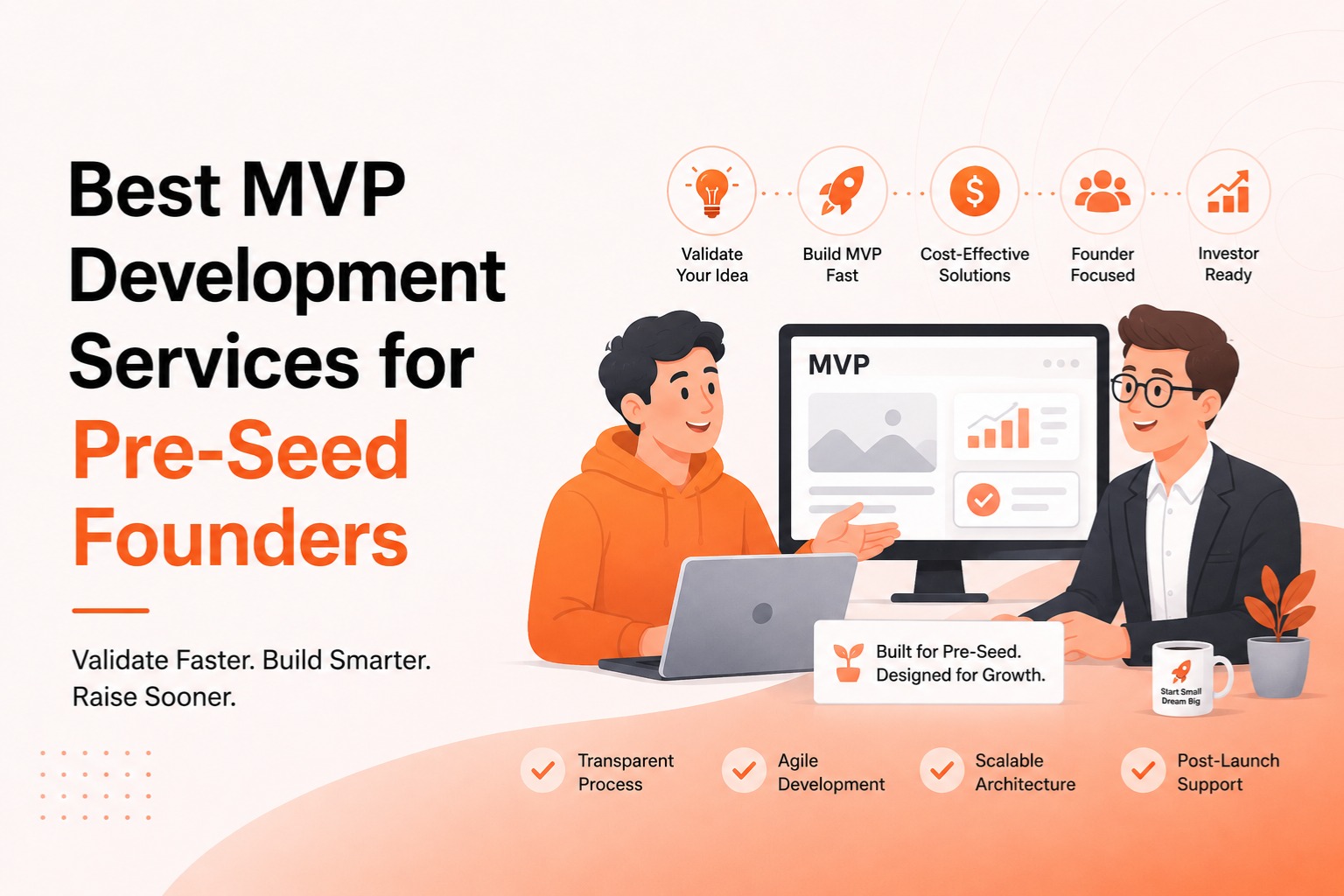
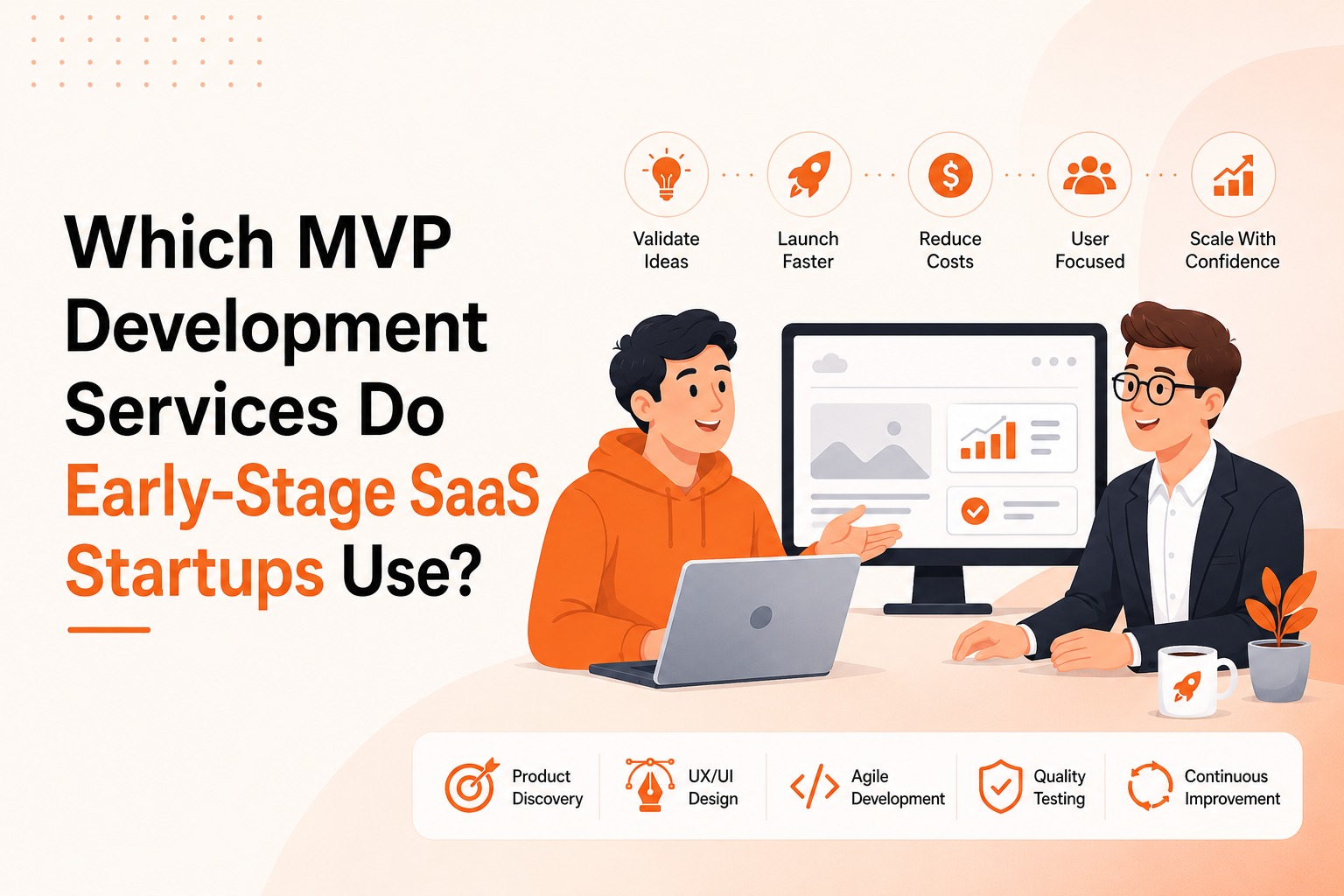
Pre-seed founders need MVP development services to validate ideas before investing heavily in product development. A well-planned MVP helps to test market demand, gather user feedback, reduce risk, and build a stronger foundation for fundraising. The best MVP development services focus on validation, product strategy, and rapid iteration rather than simply building software.
Why Pre-Seed Founders Need MVP Development Services
Starting a company at the pre-seed stage comes with uncertainty. Founders often have a promising idea but limited resources, limited market data, and no proof that customers will actually use the product.
This is where an experienced MVP development company or MVP development services become valuable. They help founders turn ideas into testable products without spending months building unnecessary features.
Common Challenges at the Pre-Seed Stage
Many pre-seed founders are first-time entrepreneurs or non-technical founders. They often struggle to estimate development costs, define MVP features, and evaluate technical decisions. A reliable MVP development service can guide these early stages and reduce costly mistakes.
Most pre-seed founders face similar challenges:
-
Limited budget and resources
-
Lack of technical expertise
-
Uncertainty about market demand
-
Difficulty prioritizing features
-
Pressure to show progress to investors
Without proper validation, founders can spend significant time and money building a product that customers may not need.
Why Validation Matters Before Raising Funds
A validated MVP can provide early traction indicators such as user signups, customer interviews, product usage data, or pilot customers. These signals often help founders demonstrate progress and reduce uncertainty during investor discussions.
An MVP allows startups to:
-
Test assumptions with real users
-
Collect meaningful feedback
-
Measure customer interest
-
Improve the product based on real-world usage
-
Reduce business and development risk
Validation is especially important before fundraising. Research published by CB Insights on startup failure reasons consistently shows that lack of market need is one of the most common reasons startups fail. By validating demand early, founders can make informed decisions and approach investors with stronger evidence of product potential.
How Much Do MVP Development Services Cost for Pre-Seed Startups?
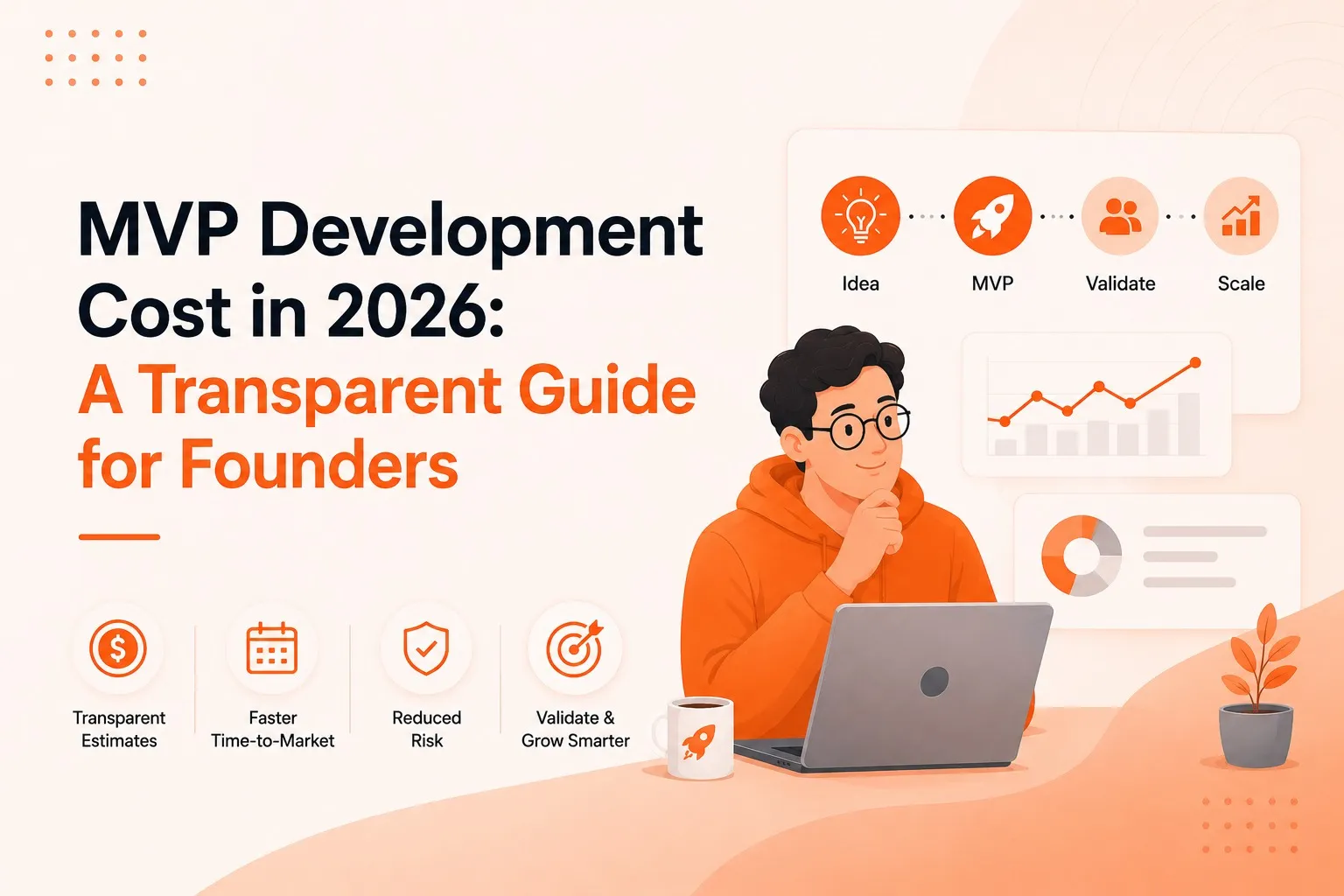
The cost of MVP development services depends on the product's complexity, features, and development requirements. Industry estimates show that most startup MVPs typically cost between $15,000 and $50,000, while more complex products may require a larger investment.
For pre-seed startups, the goal should be to build only the core features needed to validate the idea. A focused MVP helps control development costs, accelerate launch timelines, and gather valuable user feedback before investing in a full-scale product.
Factors that commonly affect MVP development costs include:
-
Feature scope
-
Product complexity
-
Web or mobile development
-
UI/UX design requirements
-
Third-party integrations
-
Development team expertise
Rather than focusing solely on price, founders should prioritize a development partner that can help validate the idea and reduce unnecessary development work. A well-planned MVP often delivers more value than a larger product built without validation.
What Makes a Good MVP Development Service?
Not all MVP development services provide the same level of value.
Some focus only on development, while others help founders validate ideas, define product strategy, and improve the product after launch.
The best MVP development services combine technical execution with product thinking.
Focus on Validation and Learning
The goal of an MVP is not to launch a perfect product.
The goal is to learn as quickly as possible.
This approach is based on Eric Ries's Lean Startup methodology, which encourages startups to build the smallest viable version of a product, gather feedback, measure results, and improve through continuous learning.
A strong MVP development service helps founders:
This process reduces uncertainty and helps avoid costly mistakes later.
Product Strategy Before Development
Successful MVPs start with a clear strategy.
Before development begins, founders should understand:
-
Who their target users are
-
Which problem are they solving
-
Which features are essential
-
What success looks like
-
How progress will be measured
Many startup advisors, including recommendations from the Y Combinator Startup Library, encourage founders to focus on solving a specific problem for a clearly defined audience before expanding product functionality.
Building without a strategy often leads to feature overload, delayed launches, and unnecessary development costs.
Many founders assume their biggest risk is launching too early. In reality, spending months building features that customers never wanted is often the more expensive mistake.
Flexible Development and Iteration
Startups evolve quickly.
User feedback often reveals new opportunities, feature gaps, or unexpected challenges.
A good MVP development service supports:
-
Agile development
-
Rapid testing
-
Continuous improvements
-
Feature refinement
-
Fast iteration cycles
Flexibility allows founders to adapt their product as they learn more about customer needs and market demand.
MVP Development Agency vs Freelancers vs In-House Teams
Pre-seed founders typically choose between freelancers, in-house teams, and MVP development agencies.
Each option offers different advantages depending on budget, timeline, and long-term goals.
Comparing Cost, Speed, and Expertise
|
Option
|
Initial Cost
|
Speed to Launch
|
Product Guidance
|
Scalability
|
|
Freelancer
|
Low
|
Moderate
|
Limited
|
Limited
|
|
In-House Team
|
High
|
Moderate
|
High
|
High
|
|
MVP Development Agency
|
Moderate
|
High
|
High
|
High
|
For many pre-seed startups, MVP development agencies offer the best balance of cost, speed, and expertise.
Which Option Fits Pre-Seed Startups Best?
Freelancers can work well for smaller projects or specific technical tasks.
In-house teams may be suitable for startups with substantial funding and long-term hiring plans.
However, many pre-seed founders benefit most from MVP development agencies because they provide:
-
Product strategy support
-
UX/UI design expertise
-
Development resources
-
Faster execution
-
Ongoing product guidance
Instead of managing multiple specialists, founders gain access to a complete team focused on product launch and validation.
Characteristics of the Best MVP Development Services
The best MVP development services do more than build software. They help founders validate ideas, prioritize features, and make informed product decisions.
Look for services that offer:
-
Product discovery workshops
-
Market validation support
-
UX/UI design expertise
-
Agile development processes
-
Post-launch iteration support
-
Startup-focused product strategy
A service that combines technical execution with business understanding often delivers greater value than a team focused only on coding.
What to Look for in an MVP Development Partner
Choosing the right partner can significantly impact the success of an MVP.
The ideal partner should understand startup challenges, not just software development.
Startup Experience and Product Thinking
Startup-focused teams understand the importance of validation, iteration, and speed.
Look for a partner that can:
Product thinking is often just as important as technical expertise.
A team that understands startup growth can help founders avoid common mistakes and make smarter product decisions.
Transparent Process and Ongoing Support
Transparency creates better collaboration and fewer surprises during development.
A reliable MVP development partner should provide:
-
Clear timelines
-
Defined milestones
-
Regular communication
-
Progress updates
-
Post-launch support
Support after launch becomes especially valuable when founders begin collecting feedback and planning future improvements.
Choosing the Best MVP Development Service
The best MVP development service is one that helps founders learn faster, reduce risk, and move closer to product-market fit.
Instead of choosing solely based on price, founders should evaluate the overall value a development partner can provide.
Questions to Ask Before Hiring
Before selecting an MVP development partner, ask:
-
Have you worked with pre-seed startups before?
-
How do you approach product validation?
-
What is your process for defining MVP features?
-
How do you handle product iterations?
-
What support do you provide after launch?
-
How do you measure project success?
The answers can reveal whether a team is focused on startup outcomes or simply delivering software.
Signs of a Strong MVP Development Partner
Look for these indicators:
-
Proven startup experience
-
Strong communication practices
-
Product strategy expertise
-
Agile development processes
-
User-focused decision-making
-
Transparent pricing
-
Ongoing support capabilities
A strong partner acts as a strategic collaborator rather than just a development vendor.
Lessons from Successful Startup MVPs
Many successful startups began with simple MVPs before becoming global companies.
Examples frequently highlighted in startup communities include Dropbox's early MVP validation approach, Airbnb's initial market testing strategy, and Uber's early launch model. These companies focused on validating customer demand before investing heavily in additional features and expansion.
Despite operating in different industries, these companies shared a common approach: they validated customer demand before investing heavily in product expansion.
While every startup journey is different, these examples reinforce an important lesson: learning from real users early is often more valuable than building a feature-rich product from the start.
Quick Checklist for Pre-Seed Founders
Before investing in MVP development services, take a few minutes to assess whether you have the fundamentals in place. This checklist can help you avoid unnecessary development costs and make better product decisions.
✓ Can you clearly explain the problem your product solves in one or two sentences?
✓ Have you identified a specific target audience for your MVP?
✓ Do you know the 3–5 core features required for launch?
✓ Have you spoken with potential users to validate the problem?
✓ Have you defined what success looks like (e.g., signups, user feedback, pilot customers)?
✓ Do you have a realistic budget and timeline for MVP development?
✓ Have you compared freelancers, in-house teams, and MVP development agencies?
✓ Does your chosen development partner offer product strategy as well as development?
✓ Have you reviewed their startup or MVP development experience?
✓ Do they provide support for post-launch improvements and iterations?
A completed checklist does not guarantee success, but it can help pre-seed founders reduce risk, stay focused on validation, and choose an MVP development partner that aligns with their startup goals.
Frequently Asked Questions
What is an MVP development service?
An MVP development service helps startups build a minimum viable product with essential features needed to test an idea and gather user feedback before investing in full-scale development.
Why do pre-seed founders need an MVP?
An MVP helps pre-seed founders validate their business idea, demonstrate traction, and reduce risk before seeking investment or expanding development efforts.
How much does MVP development cost for a pre-seed startup?
Costs vary based on product complexity, features, and development requirements. MVPs are generally more affordable than full-scale products because they focus only on core functionality.
Should pre-seed founders hire freelancers or an MVP development agency?
Freelancers may be suitable for smaller projects, while MVP development agencies typically provide a complete team, product guidance, and ongoing support that many pre-seed founders need.
What should founders look for in an MVP development service?
Founders should evaluate startup experience, communication, transparency, development process, product strategy expertise, and post-launch support.
Can an MVP help with fundraising?
Yes. A working MVP can demonstrate market demand, user engagement, and product potential.
Guidance from Techstars on startup fundraising and traction highlights the importance of showing evidence that customers want the product. User feedback, adoption metrics, and early engagement data collected through an MVP can strengthen investor conversations and improve fundraising readiness.
Build Smarter Before You Scale
For pre-seed founders, success is not about building the most advanced product on day one. It is about validating an idea, understanding customer needs, and reducing risk before making larger investments.
The best MVP development services help founders move from concept to validation faster by combining product strategy, rapid development, and continuous iteration. With the right MVP development partner, startups can gather meaningful market insights, improve their chances of achieving product-market fit, and approach fundraising with greater confidence.
Ready to transform your startup idea into a validated product? Partner with an experienced MVP development team like Multisyn Tech that can help you build, test, launch, and refine your MVP while minimizing risk and maximizing learning.