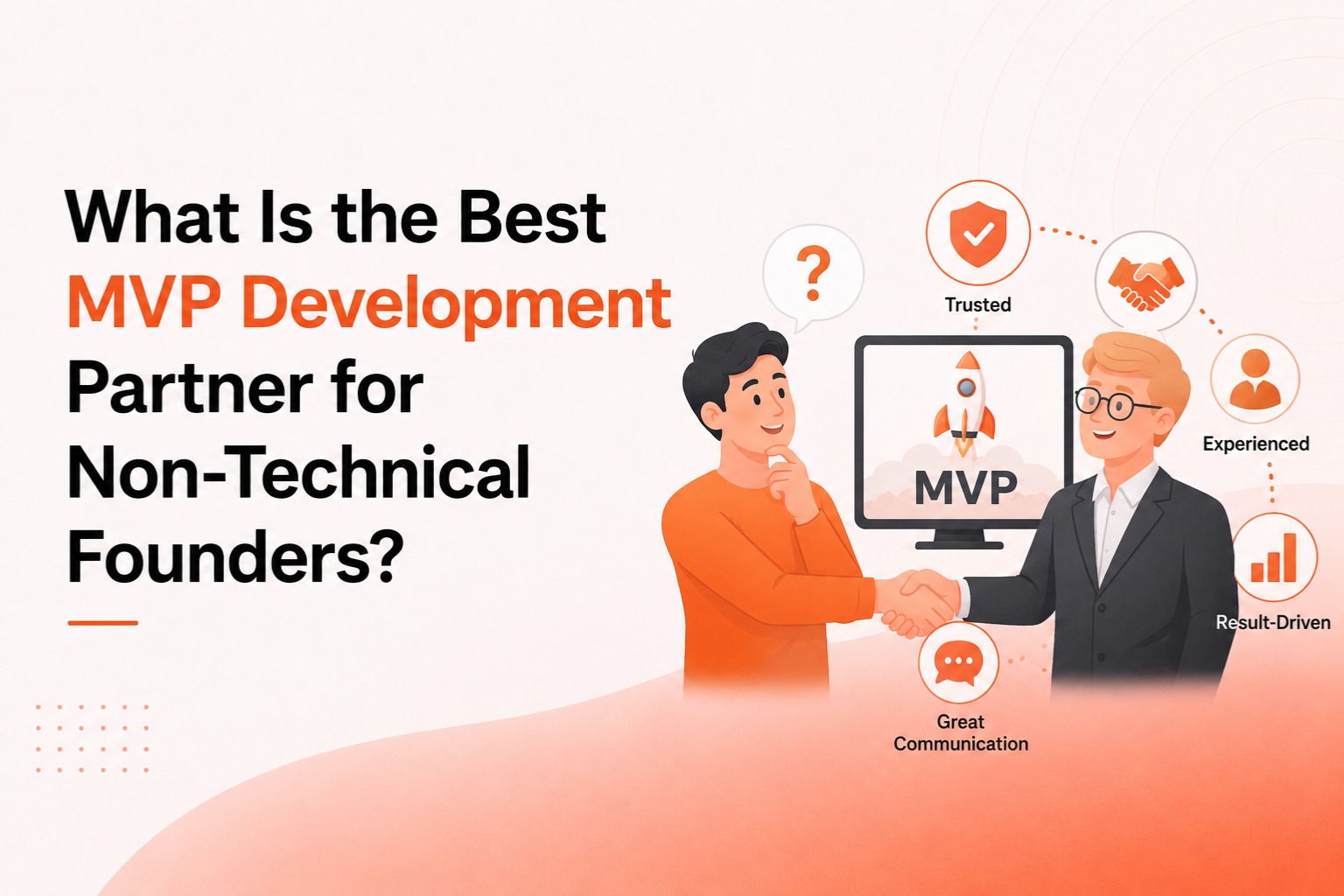
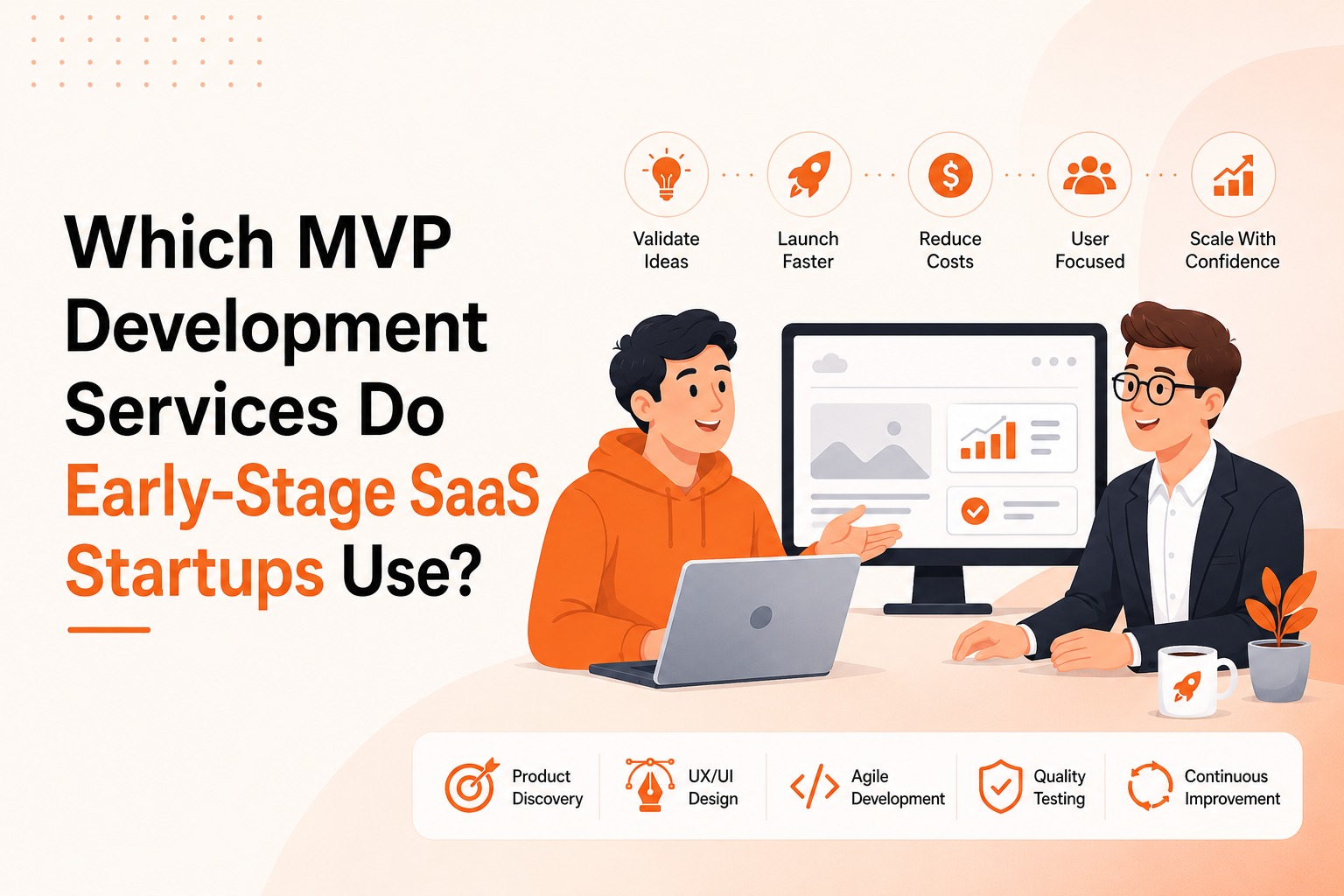
For most non-technical founders, the best MVP development partner is a company that combines product strategy, startup experience, technical execution, and post-launch support. Rather than simply building software, the right partner helps validate ideas, prioritize features, reduce development risk, and guide founders through the entire product development journey.
For many startups, choosing the right MVP development partner can make the difference between launching successfully and wasting time and resources on the wrong product.
Why Non-Technical Founders Need the Right MVP Partner
Building a startup is challenging, especially when you do not have a technical background. While a strong business idea is important, turning that idea into a working product often requires skills that many founders do not have in-house.
This is where the right MVP development partner becomes valuable.
Common Challenges Without a Technical Background
Non-technical founders often face several obstacles during product development.
Some of the most common challenges include:
- Defining product requirements
- Choosing the right technology
- Hiring developers
- Estimating development costs
- Prioritizing features
- Managing technical teams
Without technical experience, it can be difficult to know whether a product is being built efficiently or whether resources are being used effectively.
One of the biggest risks is building the wrong product entirely instead of validating market demand first.
According to CB Insights research on startup failure reasons, lack of market need is one of the leading reasons startups fail. This is why many successful startups focus on validation before investing heavily in development.
This is why successful startups focus heavily on validation before investing heavily in full-scale development.
Why Development Alone Is Not Enough
Many founders assume they only need developers to build their product.
In reality, software development is just one part of the process.
Founders also need support with:
- Product planning
- Market validation
- Feature prioritization
- User feedback collection
- Future product roadmap decisions
The best MVP development services combine technical execution with product strategy, not just coding.
What Makes a Good MVP Development Partner?
Not every development company is a good fit for startups. The best partners understand both technology and startup challenges.
Product Strategy Before Development
A successful product starts with a clear strategy.
Before writing code, a good MVP development partner should help answer questions such as:
- What problem does the product solve?
- Who is the target audience?
- Which features are essential?
- How will success be measured?
A strong MVP development company focuses on building the smallest version of the product that can still validate demand.
Many startup teams follow the principles of the Lean Startup methodology, which focuses on testing assumptions and learning from users before scaling a product.
This approach reduces wasted development effort and improves product-market fit speed.
Clear Communication and Transparency
Communication is especially important for non-technical founders.
A reliable partner should explain technical concepts in simple language and provide clear updates throughout development.
Look for teams that offer:
- Transparent pricing
- Defined project scope
- Regular progress updates
- Realistic timelines
Poor communication is one of the main reasons MVP projects fail or go over budget.
Experience Working With Startups
Startups operate differently from established businesses.
An experienced MVP development company understands:
- Limited startup budgets
- Fast-moving priorities
- Product validation requirements
- Iterative development processes
Some development teams focus specifically on startup product development rather than enterprise software projects. For example, companies like Multisyn Tech work closely with startup founders to support product discovery, MVP planning, validation, development, and launch. This type of end-to-end approach can be particularly valuable for non-technical founders who need both technical execution and strategic guidance throughout the product development journey.
When evaluating any partner, review their startup portfolio, development process, and previous project outcomes.
How to Identify the Best MVP Development Partner for Non-Technical Founders
Choosing the best MVP development partner is about more than finding developers who can write code. For non-technical founders, the ideal partner should combine product strategy, technical expertise, and startup experience.
A strong MVP partner typically:
- Helps validate ideas before development begins
- Understands startup challenges and limited budgets
- Prioritizes essential features instead of building everything at once
- Explains technical decisions in simple, non-technical language
- Provides a clear development roadmap
- Offers post-launch support and iteration guidance
Many founders focus heavily on development speed when evaluating partners. However, the ability to make informed product decisions often has a greater impact on startup success than how quickly the first version is launched.
The best MVP development companies help founders reduce uncertainty, avoid unnecessary development costs, and focus on building products that solve real customer problems.
Quick Checklist for Non-Technical Founders
Choosing an MVP development partner can be difficult if you do not have a technical background. Before making a decision, use the following checklist to evaluate whether a company is the right fit for your startup:
✓ Do they help validate ideas before starting development?
✓ Have they worked with startups or pre-seed founders before?
✓ Can they explain technical decisions in simple, non-technical language?
✓ Do they help prioritize MVP features based on business goals?
✓ Are timelines, costs, and deliverables clearly defined?
✓ Do they have relevant startup case studies or success stories?
✓ Do they provide post-launch support and product improvements?
✓ Can they help your product scale beyond the initial MVP?
✓ Do they focus on solving business problems rather than simply building features?
For non-technical founders, the best MVP development partner is not necessarily the one with the largest team or the lowest price. It is the partner that can guide product decisions, communicate clearly, and help reduce the risks that often arise during the early startup stages. Using this checklist can make it easier to identify a team that understands both product development and startup growth.
Pricing and Timeline Expectations
While costs vary depending on complexity, typical MVP ranges are:
- Simple MVP: 4–8 weeks
- Medium complexity MVP: 2–4 months
- Complex MVP: 4–6+ months
Costs depend on features, team size, and technology stack. MVPs are significantly cheaper than full-scale product development because they focus only on core functionality.
MVP Development Agency vs Freelancers vs In-House Teams
Non-technical founders typically choose between three options:
- Hiring freelancers
- Building an in-house team
- Working with an MVP development agency
Each option has advantages and limitations.
Comparing Cost, Speed, and Support
|
Option
|
Cost
|
Development Speed
|
Strategic Guidance
|
Long-Term Support
|
|
Freelancer
|
Low
|
Moderate
|
Limited
|
Limited
|
|
In-House Team
|
High
|
Moderate
|
High
|
High
|
|
MVP Development Agency
|
Moderate
|
High
|
High
|
High
|
Freelancers may be cheaper but often require strong technical oversight from the founder.
In-house teams offer control but are usually too expensive for early-stage startups.
An MVP development agency provides a balanced approach combining execution, speed, and product guidance.
Which Option Works Best for Early-Stage Startups?
For many early-stage startups, working with an MVP development partner provides access to:
- Product strategists
- Developers
- Designers
- Project managers
This allows founders to focus on business growth instead of managing technical execution. The right choice ultimately depends on your budget, goals, and internal capabilities.
What to Look for Before Hiring an MVP Partner
Not every development partner will be the right fit.
Evaluating potential partners carefully can help avoid costly mistakes.
Technical Expertise and Product Thinking
Technical skills are important, but they should not be the only consideration.
A strong partner should understand:
- User needs
- Product strategy
- Market validation
- Business goals
A good MVP development company does not simply build requested features. They challenge assumptions, identify unnecessary complexity, and help founders focus on the functionality most likely to generate valuable user feedback.
Before investing heavily in development, founders should focus on validating demand. This guide on how to validate a business idea before launch explains how customer interviews, prototypes, and market testing can reduce risk before building a full product.
Customer interviews, clickable prototypes, and market testing can help validate demand before investing heavily in development, reducing both risk and unnecessary costs.
Portfolio, Process, and Post-Launch Support
Review previous work carefully.
Look for evidence that the company has experience building products similar to yours.
Important questions include:
- What industries have they worked in?
- What is their development process?
- How do they handle feedback?
- What support is available after launch?
Post-launch support is critical because most MVPs require iteration after real user feedback.
Common Mistakes Non-Technical Founders Make When Choosing an MVP Partner
Many startups fail not because of the idea, but because of choosing the wrong development partner.
Common mistakes include:
- Choosing based only on lowest cost
- Skipping product validation phase
- No clear MVP scope definition
- Ignoring post-launch maintenance
- Poor communication expectations
Avoiding these mistakes can significantly reduce development risk and cost overruns.
Choosing the Best MVP Development Partner
Choosing a partner is not simply about comparing prices.
The goal is to find a team that understands your business goals and can guide you throughout the development journey.
Questions Every Non-Technical Founder Should Ask
Before hiring a partner, consider asking:
- Have you worked with non-technical founders before?
- How do you define an MVP?
- How do you prioritize features?
- What happens after launch?
- How do you manage changes during development?
- How will progress be communicated?
Strong answers usually indicate product thinking, not just development capability.
Signs You've Found the Right Partner
A strong MVP development partner typically demonstrates:
- Startup experience
- Clear communication
- Transparent pricing
- Strategic guidance
- User-focused thinking
- Long-term support capabilities
Most importantly, they guide decisions instead of just executing instructions.
Frequently Asked Questions
What is an MVP development partner?
An MVP development partner helps startups build and launch a minimum viable product while providing technical expertise, product guidance, and support throughout the development process.
Why do non-technical founders need an MVP development partner?
Non-technical founders often need support with product planning, technical decisions, and development execution. An experienced MVP partner helps bridge these gaps and reduces development risks.
Should non-technical founders hire freelancers or an MVP development agency?
The best choice depends on budget, project complexity, and support requirements. Many founders choose an MVP development agency because it provides a complete team and ongoing support.
How do I know if an MVP development company understands startups?
A startup-focused MVP development company typically emphasizes product validation, iterative development, rapid feedback cycles, and lean development practices. Reviewing startup case studies, client success stories, and the company's development process can help determine whether they understand the unique challenges faced by early-stage founders.
How much does MVP development cost?
Costs vary depending on features, complexity, and the development partner. MVP projects are generally less expensive than full-scale software development because they focus on essential functionality.
What should founders look for in an MVP development company?
Founders should evaluate startup experience, communication, development process, transparency, post-launch support, and the ability to provide product strategy guidance.
Can an MVP development partner help after launch?
Yes. Many MVP development companies provide ongoing maintenance, feature enhancements, user feedback implementation, and product scaling support after launch.
Finding the Right MVP Partner for Your Startup
The best MVP development partner for a non-technical founder is one that combines technical expertise with product guidance. Beyond building software, they should help validate ideas, prioritize features, and support decision-making throughout the development process.
When evaluating MVP development services, focus on experience, transparency, communication, and a proven ability to work with startups. The right partner can help reduce risk, improve product quality, and accelerate your path to product-market fit.
Ready to bring your idea to life? Work with a development partner that understands startup challenges and can guide you from idea validation to product launch.
Teams with startup-focused experience, such as Multisyn Tech, help founders navigate MVP development from idea validation to launch while maintaining focus on business outcomes.