The digital landscape has shifted; in 2026, we are moving from Google to conversing with AI Search Engines like ChatGPT, Gemini, and Perplexity. Traditional SEO is no longer the finish line; these platforms now provide definitive recommendations and synthesized answers, not just a list of links. Staying ahead of this curve is the only way to ensure your brand remains visible, credible, and trusted in an AI-driven world. To help you lead, this guide reveals the exact technical strategies and content blueprints needed to dominate AI rankings. We will explore how different AI models evaluate your data and show you how to transform your business into the Topical Authority that every AI bot recommends. Let’s dive into the future of search together.
What Makes AI Search Engines Different?
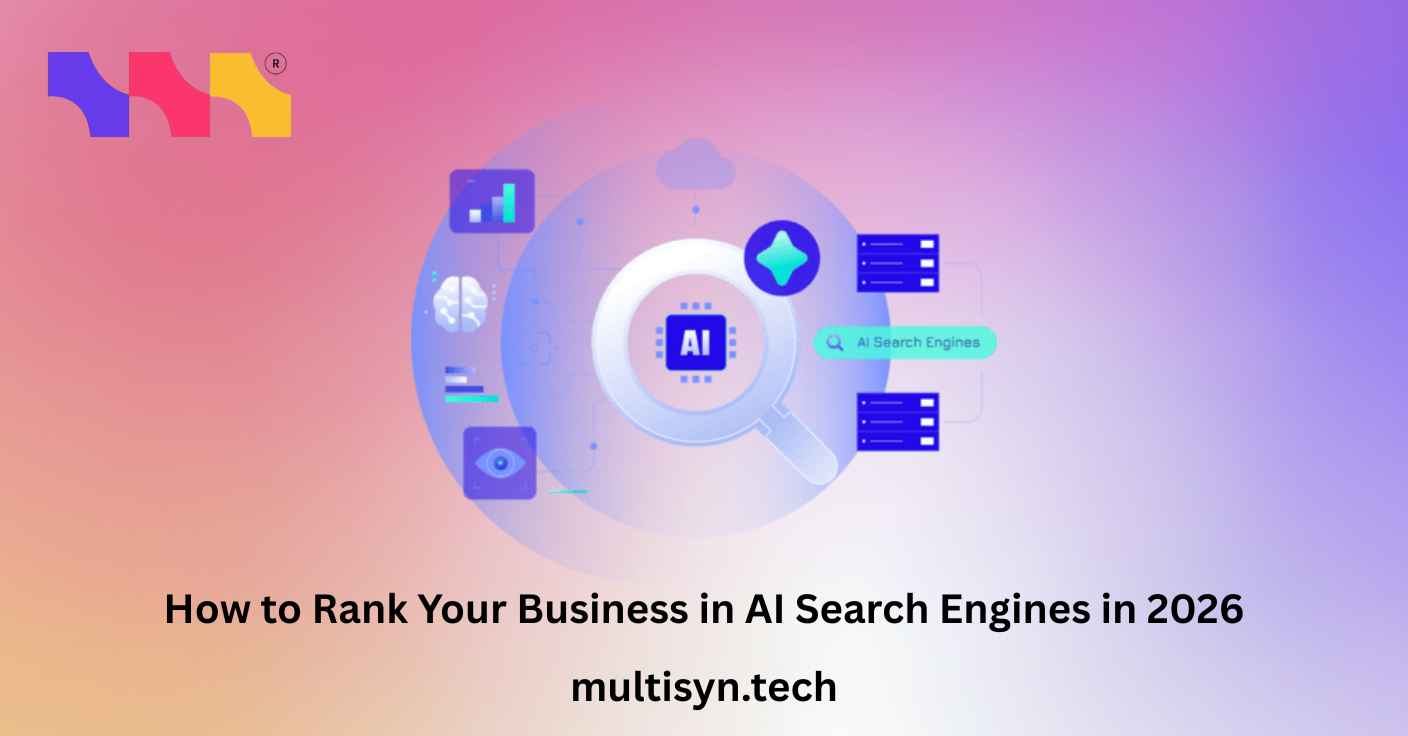
To rank well, you first need to understand the fundamental shift in how information is processed. Traditional search engines focused on matching keywords and backlinks to rank websites. AI Search Engines operate as Aggregators. Instead of providing a list of links, they scan the entire web, including social media and technical documents, to synthesize a single, cohesive answer for the user.
For example, when a user asks, "Which is the best tech consultancy in 2026?" the AI moves beyond simple keyword matching. It evaluates your Brand Authority by cross-referencing reviews, citations, and the overall sentiment of your digital presence. The goal of the AI is to decide if your brand is worth recommending. Understanding this logic is the first step toward optimizing for specific models like ChatGPT, Gemini, and Perplexity, which we will explore next
Understanding the Key Platforms: ChatGPT, Perplexity, Grok & Gemini
Each AI platform has a personality and a specific way it gathers data. Knowing these differences is the first step in learning how to improve brand visibility in AI search engines.
1. ChatGPT (OpenAI)
ChatGPT is a conversational engine that gives direct answers instead of a list of links. It rewards topical depth over keywords. To rank here, structure your content as a Knowledge Hub with expert guides and case studies. By providing the most comprehensive answers, your brand becomes the trusted source ChatGPT recommends.
2. Perplexity AI: The Real-Time Researcher
Perplexity is a real-time Answer Engine that scans the live web to provide factual, source-backed answers. It acts like a digital librarian, prioritizing verifiable data and citations. To rank here, your content must be structured with clear facts and data points that AI can easily extract. By earning mentions on high-authority platforms, your brand becomes a "Primary Reference" that Perplexity cites and links to direct
3. Google Gemini
Gemini is deeply integrated into the Google ecosystem. It prioritizes data from Google Business Profiles, Maps, and YouTube. For local businesses, keeping your Google profile updated is the single best way to show up in Gemini’s responses.
4. Grok (xAI)
Grok has a unique advantage: real-time access to X (formerly Twitter). If your brand is being discussed frequently and positively on social media, Grok will pick up that social signal and recommend you to its users.
How to Plan Content for AI Search Engines
In 2026, content is not about filling pages; it is about answering questions. When you plan content for AI search engines, you must think like a teacher, not a salesman. This means your priority is to provide objective value, solve problems, and educate the user through clear, structured information.
-
The Direct Answer Model: AI bots love clarity. Start your blog posts or service pages with a clear, 2-3 sentence summary. This makes it easy for the AI to snippet your content.
-
Use Natural Language: Write exactly how your customers speak. Instead of using Strategic Tech Optimization, try How to make your business tech faster.
-
Structured Data (Schema): This is the hidden language of AI. Using technical Schema markup helps AI understand exactly what your price, location, and services are without any guesswork.
-
Clusters & Semantic Linking: AI models look for Topical Authority rather than isolated keywords. Organizing your content into pillar pages and related sub-topics tells the AI that you are an expert across the entire subject.
-
Conversational Q&A Sections: AI search engines prioritize direct answers to user intent. Adding a dedicated FAQ section with What, How, and Why questions provides the exact data snippets that models like Perplexity and Gemini love to extract.
At Multisyn Tech, we specialize in creating this bridge between technical accuracy and human readability, ensuring that AI bots understand your business as clearly as your customers do.
Competitive Analysis for AI Search Engines
You cannot rank in a vacuum. You need to know what your competitors are doing right. Competitive analysis for AI search engines in 2026 involves more than just checking their keywords.
Ask the AI directly Why is [Competitor Name] better than [Your Brand]?" The AI will tell you exactly what it perceives as your weakness whether it’s a lack of reviews, outdated content, or poor mobile experience. Use this feedback to fill the gaps. Check which sources Perplexity is citing for your competitors and try to get mentioned on those same platforms (like industry news sites or niche forums).
Intelligent Search Engine Examples and Why They Matter
Looking at intelligent search engine examples helps us see where the future is going. Beyond the big four, we see specialized AI like Consensus for research or You.com for personalized search.
These examples show us that Search is becoming fragmented. Some people use AI for shopping, some for coding, and some for local services. To rank across all of them, your brand needs a Consistent Digital Footprint. Your name, address, and core values must be the same whether someone finds you on a LinkedIn post, a Reddit thread, or your official website.
Technical Tips to Improve Your AI Visibility
If you want to stay ahead of the curve, focus on these three pillars:
1. Focus on Citations, Not Just Links
In the past, any backlink was good. Now, AI looks for Mentions. If a reputable tech blog mentions Multisyn Tech as a leader in AI optimization, that mention counts as a high-value signal to ChatGPT, even if there isn't a direct clickable link.
2. Improve Your E-E-A-T
Experience, Expertise, Authoritativeness, and Trustworthiness. AI platforms are programmed to avoid spreading misinformation. By including case studies, author bios, and verified reviews on your site, you prove to the AI that you are a safe and reliable business to recommend.
3. Optimize for Voice and Chat
Most AI searches are conversational. Find me a tech consultant near me who handles AI is a common prompt. Ensure your content includes these long-tail, conversational phrases.
Why Brand Authority is Your Best Asset
In 2026, the Middle Man (the search results page) is disappearing. Users are trusting the AI's recommendation. This means your brand reputation is more important than ever.
At Multisyn Tech, we focus on building that authority. We don't just help you rank; we help you become the Suggested Answer. When your business is cited as a source of truth, your organic traffic becomes much more valuable because the user already trusts you before they even land on your site.
Conclusion
Ranking in AI Search Engines is a journey of building trust and clarity. By focusing on structured data, conversational content, and strong brand mentions, you can ensure your business doesn't just survive the AI revolution but leads it.
The strategy is simple: Be helpful, be clear, and be everywhere your customers are talking. If you need help navigating this new era of Answer Engines, Multisyn Tech is here to guide your strategy and ensure your brand remains at the forefront of innovation.
(FAQs)
1. Is traditional SEO dead in 2026?
Not at all. Traditional SEO provides the foundation (speed, mobile-friendliness, and keywords) that AI search engines use to find your site. Think of AI Optimization as an upgrade to your existing SEO.
2. How long does it take to rank in ChatGPT or Gemini?
AI engines update their knowledge at different rates. While Gemini and Perplexity can see changes almost instantly, ChatGPT may take longer to recognize your brand authority. Consistency is key.
3. Do I need to pay to be recommended by AI?
Currently, most AI recommendations are organic and based on merit/data. However, some platforms are testing Sponsored Suggestions. For now, focusing on high-quality content is the best free strategy.
4. Can small businesses compete with big brands in AI search?
Yes! AI values Niche Expertise. If you provide the most detailed and helpful answer for a specific local or specialized problem, the AI will recommend you over a generic big brand.
5. Why is my business not showing up in AI answers?
This usually happens due to a lack of "Structured Data" or "Third-Party Mentions." If the AI can't find your business mentioned on other reputable sites or in its database, it won't risk recommending you.