
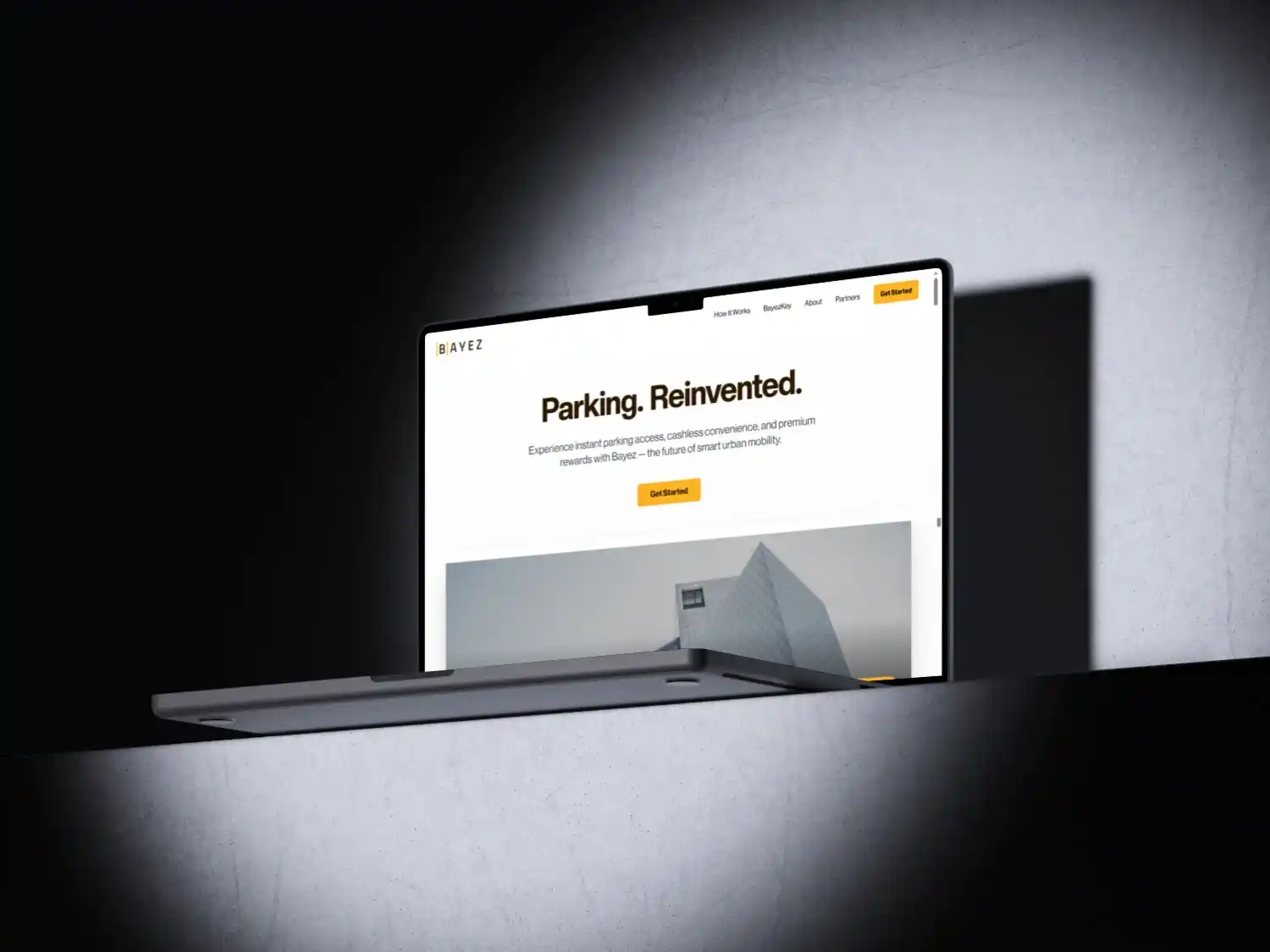
Bayez: Smart Urban Mobility Platform: Real-Time Parking, IoT & Cashless Payments
The Challenge
What Problem Were We Solving?
Multisyn Tech partnered with Bayez (UAE) to build a smart parking platform, a web dashboard and cross-platform mobile app, designed to make urban parking seamless. The solution connects IoT parking sensors with a React Native mobile app and React/Next.js web portal. It gives drivers real-time spot availability and cashless booking, while enabling administrators to monitor lots and manage payments. By digitizing parking with modern web & mobile app development, Bayez aimed to cut congestion and unlock new revenue. In fact, studies show up to 30% of city traffic is caused by drivers hunting for parking, smart parking apps using real-time data can reduce search times by ~40%, directly addressing this problem.
Bayez’s leadership needed a full-stack solution that combined hardware (sensors) with software (apps and cloud backend). They wanted a seamless parking solution that would delight users and also provide city planners with valuable analytics.
The Solution
How We Built It
Bayez needed a technology foundation that could bring real-time parking data, mobile booking, cashless payments, and centralized management together without slowing down the product. We built the platform around a modern JavaScript stack, using React Native for the iOS and Android apps, React and Next.js for the web experience, and Node.js with NestJS and Express for the backend. PostgreSQL handled the core parking, user, and transaction data, while AWS provided the infrastructure needed to scale as usage and sensor data grew.
The architecture was designed around the way Bayez actually operates. IoT sensors feed live parking availability into the platform, drivers can discover and reserve spaces from their phones, and integrated payment services enable cashless transactions. On the administration side, centralized dashboards give the team visibility into parking activity, users, transactions, and system data. By using React Native from a shared codebase, Bayez could deliver consistent iOS and Android experiences without maintaining two completely separate mobile applications.
Mobile App
React Native powers the iOS and Android applications from a shared codebase.
Web Platform
React and Next.js provide fast, responsive user and administration dashboards.
Backend
Node.js, Express, and NestJS manage business logic, APIs, sensors, and integrations.
Database
PostgreSQL securely manages parking data, users, transactions, and rewards.
Cloud Infrastructure
AWS infrastructure provides the scalability and reliability required for real-time parking data.
Integrations
Payment, push notifications, mapping, and IoT integrations connect the platform end to end.
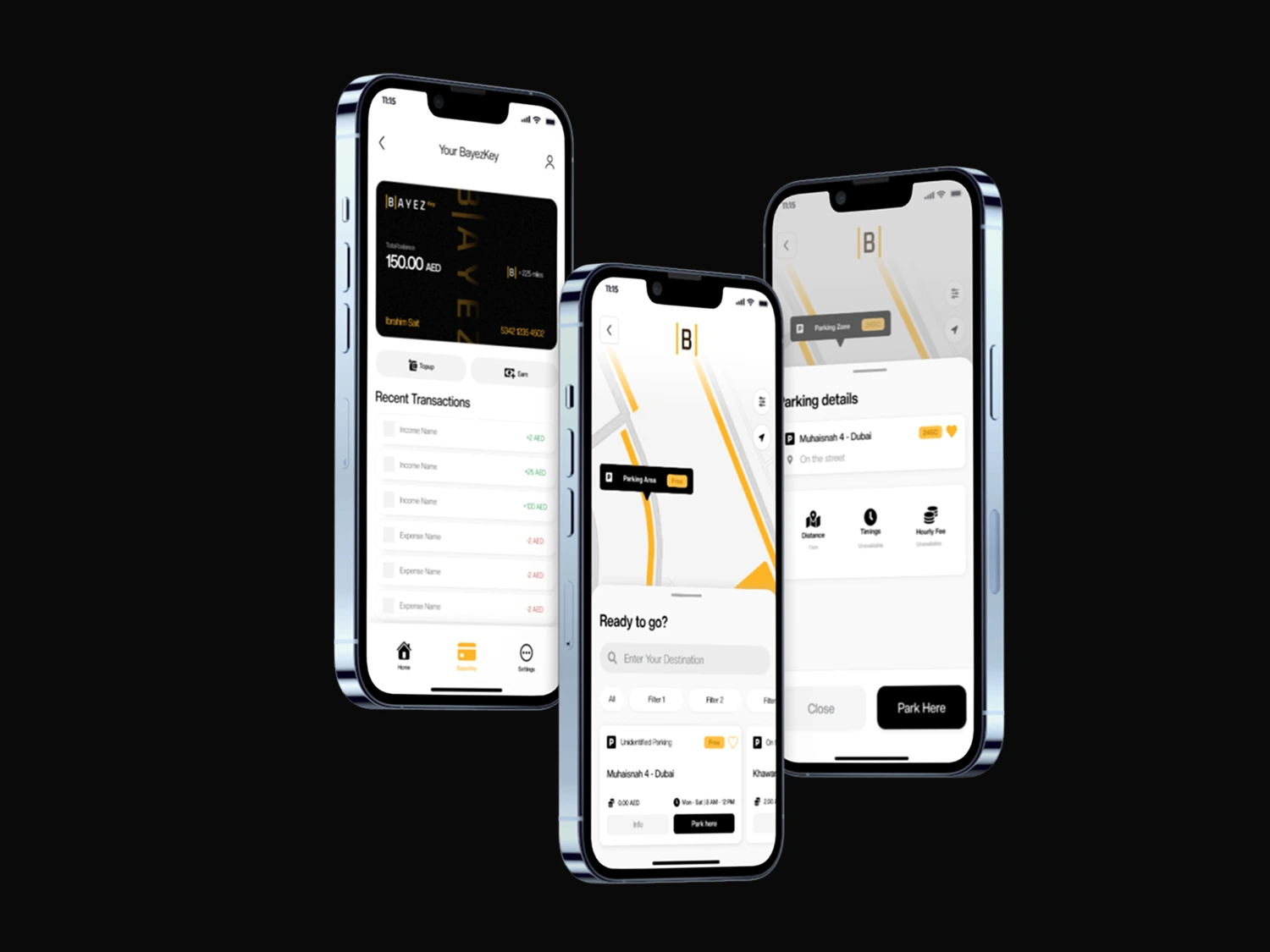
Key Features
What We Built
Real-Time Parking Map
Interactive maps show drivers nearby parking locations and live space availability powered by IoT sensors.
Instant Booking & Payments
Drivers can reserve available spaces and complete cashless payments through credit cards or supported mobile wallets.
Loyalty & Rewards
Users earn points through parking activity and can track, redeem, and manage available rewards and discounts.
Vehicle Profile & History
Drivers can save vehicle information, review previous parking sessions, and access transaction history and receipts.
Smart Push Notifications
Automated notifications remind drivers when their parking session is approaching its limit, helping reduce overstays and improve space turnover.
Admin Panel & Analytics
A centralized dashboard lets administrators manage parking zones and sensors, monitor occupancy, track transactions, process refunds, and analyze usage, peak times, and revenue.
Our Process
How We Delivered
- Business and user requirements
- Parking and booking workflows
- Payments and rewards planning
- System integration strategy
- Mobile app prototypes
- Map-based parking experience
- Reservation and payment flows
- Admin dashboards and analytics
- Scalable RESTful APIs
- WebSocket and MQTT integration
- Real-time sensor communication
- PostgreSQL database architecture
- React Native iOS & Android app
- React and Next.js dashboards
- Interactive maps and booking flows
- Data-driven charts and interfaces
- IoT and backend integration
- End-to-end system testing
- Performance and security testing
- Real-time sensor simulations
- AWS production deployment
- Post-launch monitoring and support
- Bug fixes and performance improvements
- Advanced filters and multi-language support
Our agile, phase-by-phase approach kept development transparent and focused. Bayez remained involved throughout the project, reviewing progress in sprints and helping refine priorities as the platform evolved from concept to production.
The Outcome
Results That Speak for Themselves
Bayez transformed a traditionally frustrating parking experience into a connected, data-driven platform. Drivers can discover available spaces, reserve and pay digitally, receive timely parking reminders, and earn rewards, while the Bayez team gets centralized control over parking operations, sensor activity, transactions, and analytics.
Behind the experience, the platform was engineered to handle real-time IoT data, intermittent connectivity, growing traffic, and secure payment workflows. AWS infrastructure, Redis caching, MQTT communication, and scalable backend services helped create a system that could perform reliably while remaining flexible for future expansion.
Challenges We Solved
Turning Complexity Into a Scalable Platform
IoT Sensor Connectivity
MQTT communication, retry logic, and offline-tolerant workflows helped maintain reliable sensor connectivity despite intermittent signals.
Real-Time Performance
Redis caching and scalable AWS infrastructure helped the platform handle live sensor updates and spikes in user requests.
Cross-Platform Consistency
Extensive testing and platform-specific adjustments ensured consistent GPS, background execution, mapping, and payment experiences across iOS and Android.
Security & Compliance
Secure HTTPS communication, tokenized payment data, and encryption helped protect sensitive information throughout the platform.
Infrastructure Optimization
AWS auto-scaling and serverless components helped balance infrastructure costs with the demands of peak parking activity.
Future-Ready Architecture
Flexible APIs and integration-ready architecture were designed to support future systems, services, and expansion into additional cities.
More Case Studies
More Startups We've Helped
 Marketplace
Castly
Castly is an operating system for trusted talent work — brands book models, actors, UGC creators, and event hosts with every deal...
Read case study → Edtech
Audio-First Learning Platform
For an established US corporate-training company, we built an entire audio-first learning platform — web app, admin panel, iOS &...
Read case study →
